Happy Summer Everyone!
I’m starting a four-part series discussing a topic that garners both questions and some large concern – Social Security. At face value it seems like a simple issue – claim my benefits at full retirement age and enjoy a fresh deposit on the 3rd of every month.
In reality there are several issues when it comes to SSI – when to claim, spousal benefits, the solvency of the SSI Trust Fund, political meanderings, cost of living increases – you get the idea. My plan is to break this into digestible sections that include:
- When should I take Social Security?
- Will SSI be there when I need it? Could my benefits be reduced?
- Challenging the conventional wisdom of always waiting until age 70 to claim benefits (the 59 ½ Rebellion at work)
- The future of SSI – what might change
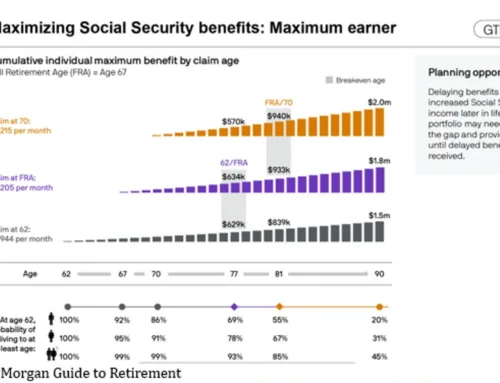
For many, their primary concern centers around timing –
“Should I take Social Security at 62, 67, or wait until 70?”
After years of helping people prepare for retirement, I’ve noticed something surprising. Many people spend months trying to optimize their Social Security claiming strategy before they’ve answered a much bigger question.
What role should Social Security play in my retirement plan?
Most people immediately jump into calculators, break-even analyses, and online articles comparing different claiming ages. Social Security was never designed to be a complete retirement plan.
A recent national retirement survey found that Social Security remains the most important source of retirement income for current retirees and is expected to be the top source of income for future retirees as well. At the same time, nearly 70% of retirees and almost 80% of workers are concerned that the government will make significant changes to the retirement system. – EBRI 2026 Retirement Confidence Survey
It is a little troubling that the income source people expect to rely on the most is also the one many people are most worried about. Retirement planning has to be bigger than a Social Security decision.
Before deciding when to claim benefits, I think there are more important questions to answer:
- What does retirement look like for you?
- Will you continue working in some capacity?
- How much guaranteed income do you need each month?
- What are your retirement spending guardrails?
- How important is leaving money to children or grandchildren?
- How long do people in your family tend to live? Will and I love the answers we get to this question. We also look forward to many of you proving yourselves wrong – long live longevity! 😊
One of the most interesting findings from that same survey was that workers expect to retire at age 65, but today’s retirees actually retired at a median age of 62. Nearly half retired earlier than they had planned. Life has a way of changing the timeline. That is why I generally encourage people to focus less on maximizing a benefit and more on building flexibility. Plans and life change – building in flexibility that fits for YOU is the primary objective in my opinion.
Next week, we’ll tackle the question I hear almost as often as when to claim:
“Will Social Security actually be there when I need it?” There is a lot of pessimism surrounding the future of SSI and it is a serious concern. We will dig into the research and realities.